Shooting still
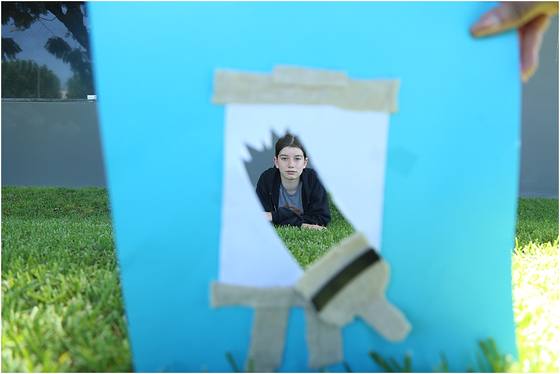
Light, shape, and patience. Objects hold still so campers can learn what every setting actually does.
Tustin, California · Ages 6 and up
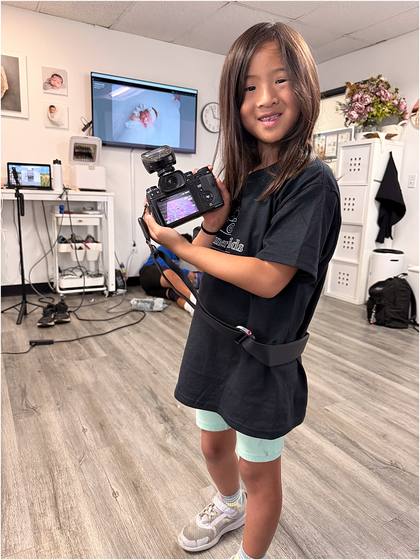
Give them a camera with an M on the dial — or borrow one of ours — and a week in a working studio. They shoot inside and out, paint their own backdrops, print black and white film, make cyanotypes in the sun, and go home with work they made themselves.
What they make
Every camper works with their hands and their camera. Nothing here is a demo they watch someone else do.
Light, shape, and patience. Objects hold still so campers can learn what every setting actually does.
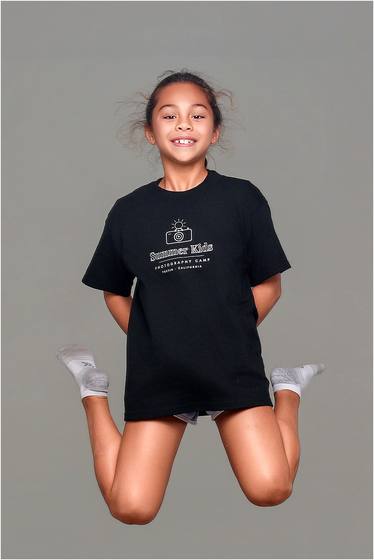
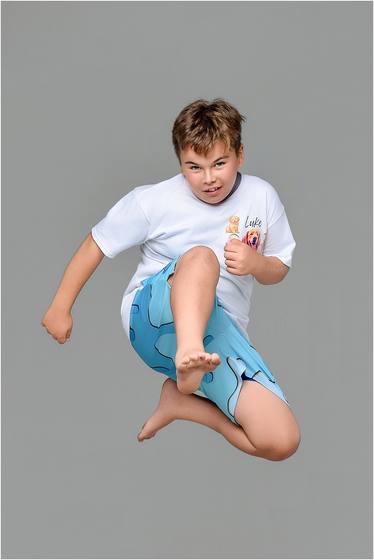
Jumps, runs, and games outside. Shutter speed makes more sense when you are chasing it.
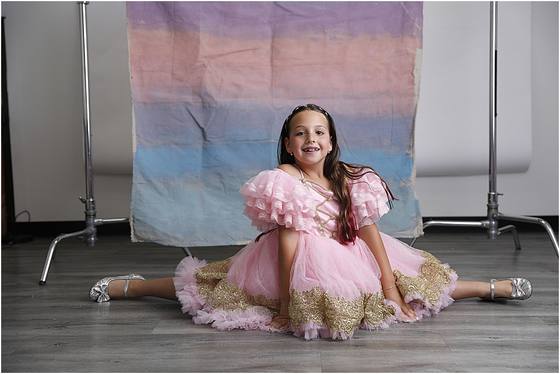
Campers design and build the scene, then light it and photograph each other in it.
Coated paper, sunlight, and a rinse. The oldest camera-less process there is, and it never stops being a thrill.
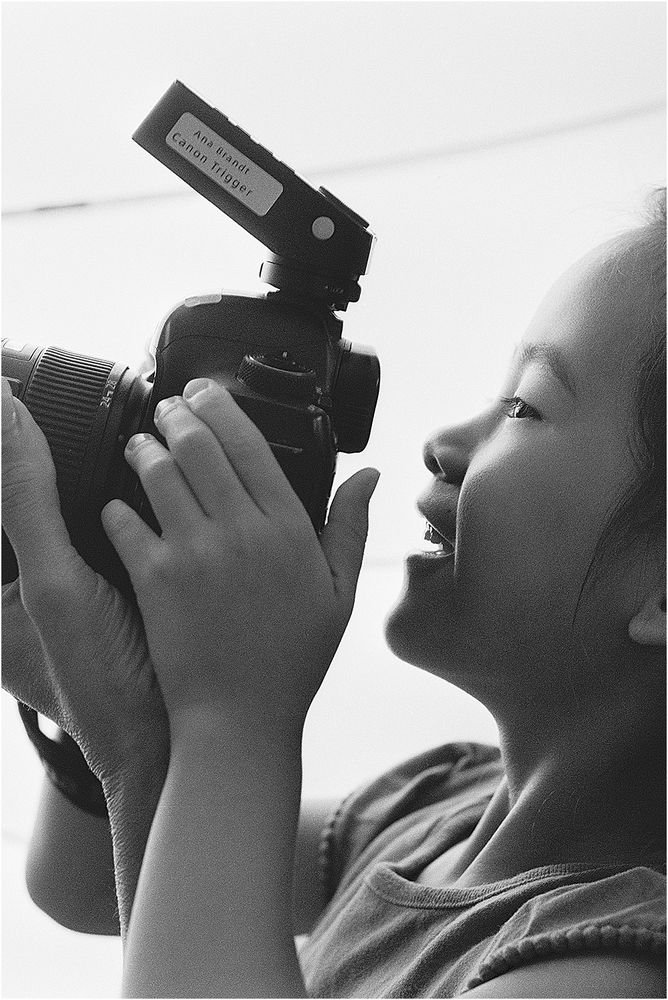
Real film, real prints. Campers see an image appear instead of tapping a screen.
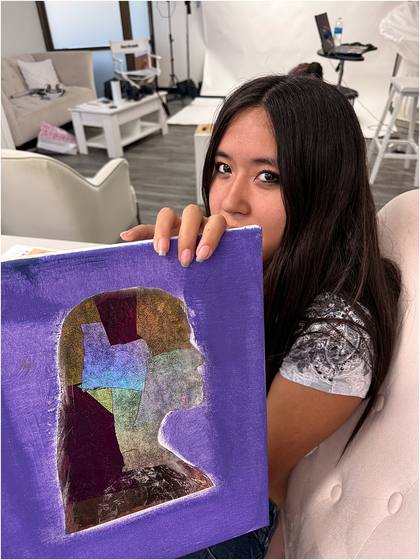
Their own photographs, cut and layered onto canvas until the picture becomes an object.
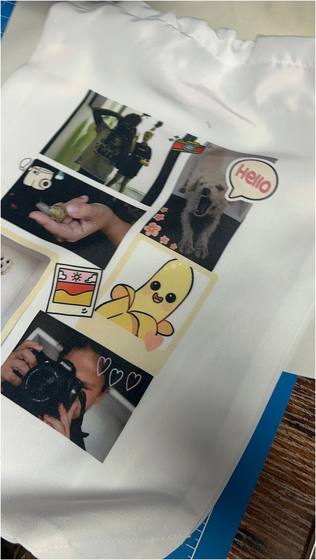
Paint, paper, thread, and print all end up on the same surface. Campers decide when it is finished.
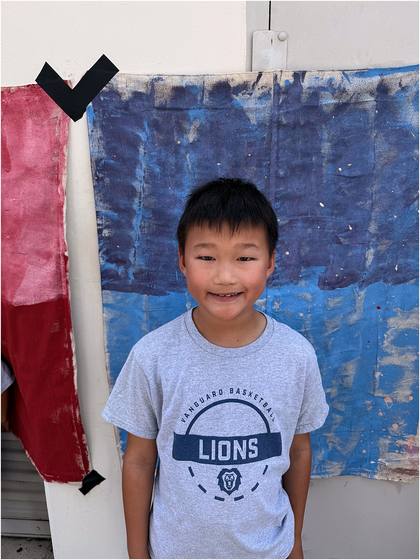
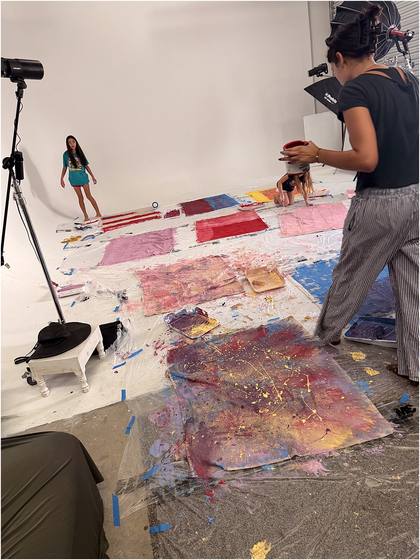
Every camper paints a canvas backdrop, hangs it, and shoots a portrait on it. Then they take it home.
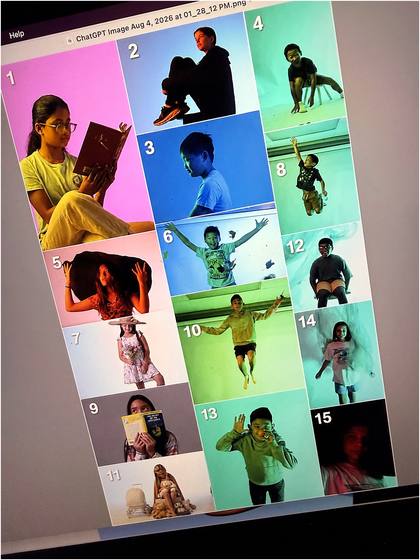
Campers lay out their own images into posters and cards. We use Canva today, and Ana is building a design program made just for kids in 2027.
Dates & registration
Classes are capped at ten students so every camper gets real time on the camera and real feedback on their work.
Book now and save 30% with code 2027
What they take home
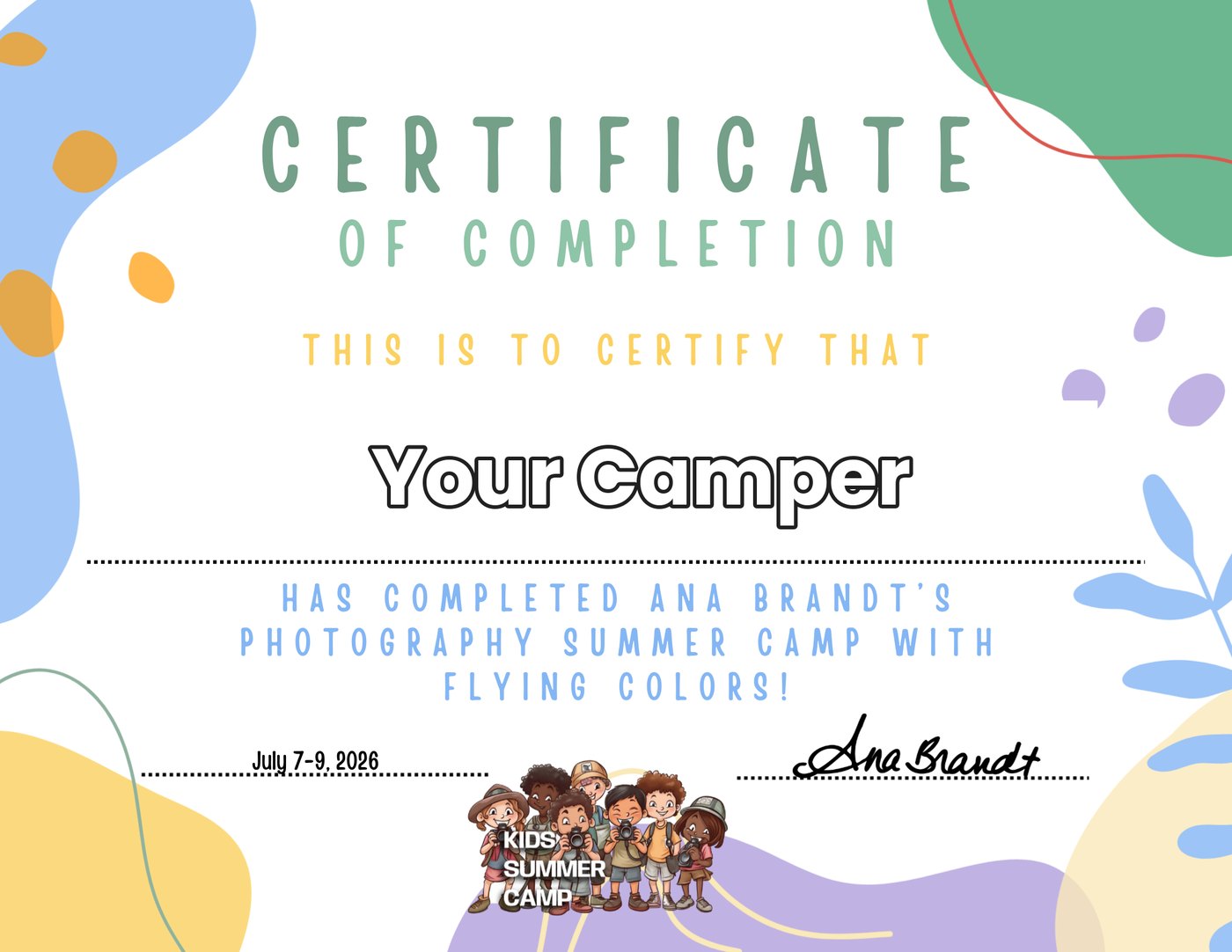
Plus every piece they made that week — including the canvas backdrop they painted, which comes home rolled up with them. Lunch is provided daily, and we ask about allergies before camp starts.
From camp parents
This was my child’s favorite camp of the summer.
We signed up for 3 days and ended up paying for an extra day because my son loved it so much.
Thank you, thank you for making a creative program for kids.
The best experience. Thank you.
From camp
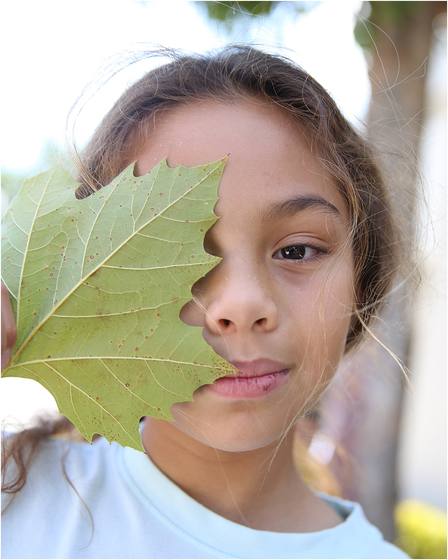
Portraits, jumps, painted backdrops, collages, and cyanotypes — all shot and made by students during camp week.
Coming soon
We’re building the camp curriculum into courses kids can take from home, wherever you live. Ana is also building her own design program for kids, launching in 2027, so campers can lay out their photos in software made for them instead of for adults. Leave your email and we’ll tell you the moment enrollment opens.
Who teaches it
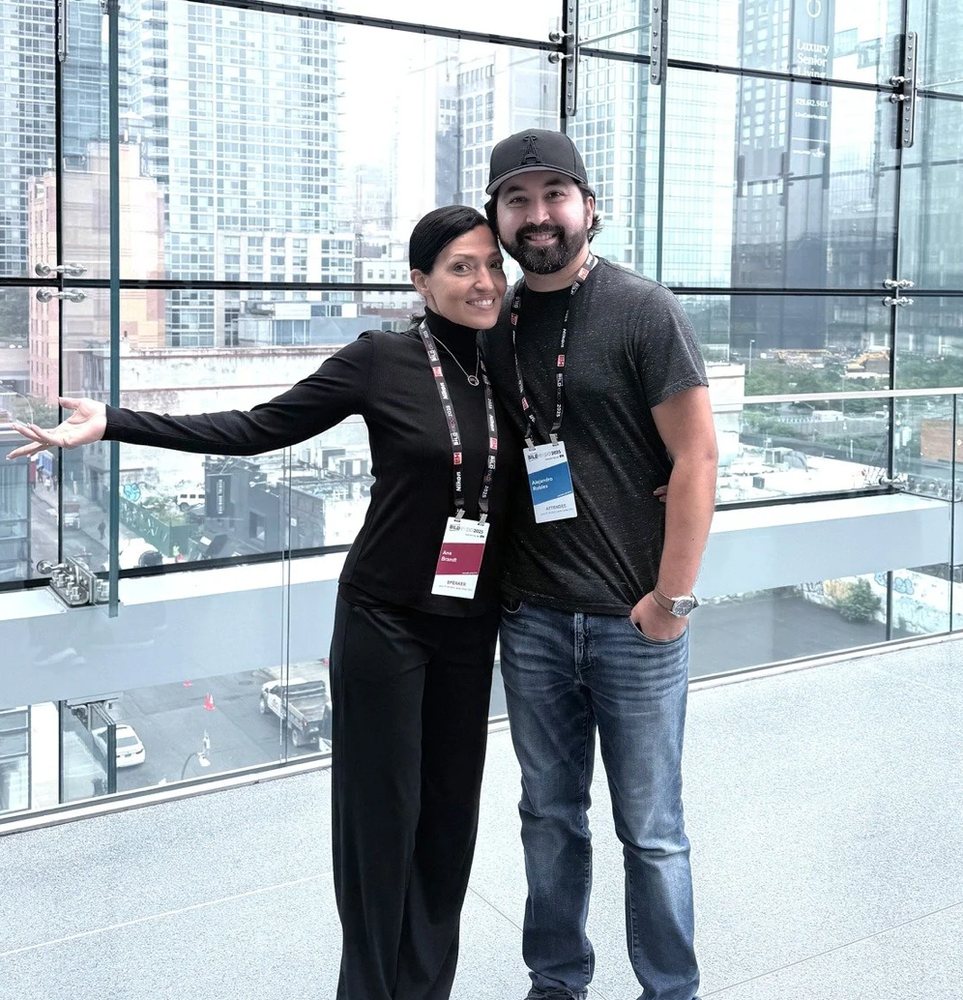
Ana and Alex have worked side by side for over 15 years. Ana wrote the camp curriculum and has taught photography for 27 years. Alex is her videographer and partner, and he handles everything behind the scenes — videography, 3D printing, shirt transfers, the water bottles, and the gear that makes camp run.
Ana taught her own children photography when they were young. Today Evan runs his own photography studio and Ava is a paid photographer at Chapman University. Start kids early, teach them properly, and it grows.
Questions
Can’t find your answer? Email the studio and we’ll get back to you, usually within a business day.
Ages 6 and up. Most campers are around 9 or 10, and we work comfortably with children and teens at every experience level.
We ask for a camera with an M on the dial so they can learn full manual control — the Canon Rebel series works well for kids. If you don’t have one, tell us. The studio keeps cameras and iPads that campers can borrow for the week at no extra cost.
Every camper starts as a beginner. It isn’t about what they already know — it’s about what we teach them. We go step by step so confidence builds quickly.
Camp runs 9:00am–3:00pm each day. Winter break camps are 3 days. Summer weeks can be booked as 3 or 5 days.
Time and creative depth. Five days means more projects, more hands-on practice, and more room to explore. Each day builds on the one before it, so nobody runs out of things to make.
Ten. That cap is deliberate — it’s how every camper gets real time on the camera and real feedback on their work.
Lunch is provided each day. We send a camp form home a week before camp starts so you can list allergies and dietary restrictions, and we plan ahead. You’re also welcome to send your own lunch.
Absolutely. The registration form has space to tell us about any challenges, sensitivities, or support your child needs. Many children on the spectrum thrive here — photography gives structure, focus, and a real creative outlet.
Ana Brandt Photography Studio, 2620 Walnut Ave Ste A, Tustin, CA 92780. Campers work in the studio and outside on the property.
Book summer 2027 now and save 30% with code 2027, or grab a winter break camp before the holidays.